

Retroactive pay refers to the wages or remuneration that is added to the employee’s salary to settle a past compensation shortfall.
You can easily analyse what is retro pay as a structured method of rectifying pay discrepancies and ensuring timely correction to provide the rightful compensation to the workforce.
Retro pay is primarily required when there is an error from the company’s payroll, as it also covers administrative delays, job reclassifications, and delayed salary hikes. However, to understand whats retroactive pay is and how you can efficiently calculate it without errors, check out our comprehensive article below.
What is Retroactive Pay?

Retroactive pay, or retro pay, is a payroll adjustment or money paid by the employer to the employee to correct a past underpayment.
Retro payments meaning can be simply understood as a form of compensation added to the employee’s paycheck or salary. It is basically the difference between the amount paid to them and the actual amount that should have been paid.
As organisations are entitled to clear the pending dues before the LWD of the employee or at the earliest due to labour laws, they use retro payment for a specific past period.
It helps them to correct payments that occurred due to delayed HR or payroll updates, system errors, policy changes, contract revisions, or legal compliance. Your salary slip will have these mentioned under arrears, salary adjustments, retro pay, or previous month adjustment.
Also Read: 40 Welcome to the Team Messages: Ideas to Make the New Employees Feel Valued
How can You Calculate Your Retro Payment?

You can easily calculate the retroactive pay depending on the employee’s compensation structure and the nature of the error. While efficient HR software like Managetrix can help you with retro pay assessment, you can refer to the pointers below for a detailed explanation of the underlying process.
Calculating the Retro Payment for Hourly Employees
The simple method of calculating retroactive pay for hourly employees is:
Retro Pay = Updated pay per hour − previously paid hourly rate
However, make sure to include the old hourly rate, new hourly rate, actual date of the increase in pay structure, and the total amount of work hours paid according to the old rate.
For instance, if an employee has received the compensation of $14/hour instead of the approved $17/hour rate for 100 hours of work, they are entitled to receive the difference amount.
Here’s how you can calculate for hourly employees:
Old Rate: $14/hour
New Rate: $17/hour
Hours worked: 100 hours
Difference: $3/hour
Retroactive Pay: $3 × 100 = $300
Calculating the Retro Payment for Salaried Employees
Now, for salaried employees, you will need the effective calculation of old and new annual salary, the difference between the two salaries, and the actual date for the salary increase or duration of the retrograde pay period.
Retro Pay = (Annual salary difference ÷ number of pay periods per year) × the number of affected pay periods
For instance, if the wages of a salaried worker increase from $50,000 to $57,000, but the change is delayed by two biweekly pay periods, then the effective calculation is:
Annual Increase: $7,000
Per pay period increase: $7,000 ÷ 26 = $269
Retroactive Pay: $269 × 2 = $538
How Retroactive Pay is Different from Back Pay?
As you have analysed what is retro pay, let’s have a look at how it is different from back pay. As back pay is used when an employee has not received their entire salary compensation for the time worked, a retro pay is utilised to compensate for the time they were underpaid for a previous pay period. Check out further differences below:
| Attributes | Retroactive Payment | Back Pay |
| Definition | Retroactive pay meaning is the additional compensation provided to the workforce to correct a previous underpayment, which was less than the amount they were entitled to receive legally or contractually. | Back pay refers to the compensation or wages that an employee is entitled to receive but hasn’t received yet due to completely unpaid work periods. |
| Nature of Payment | It is a form of adjustment payment that corrects an already processed payroll and only pays for the difference. | It is a form of compensatory payment that accounts for wage discrepancies that were entirely withheld or missed. |
| Calculation Method | This is calculated by finding the difference between the actual amount that was paid and the obligations that the firm was entitled to pay for the number of hours worked. | This is calculated by assessing the total wages that the employee has not received. It includes salary, benefits, overtime, and bonuses. |
| Common Causes | It is usually caused by payroll miscalculations, policy changes, contract revisions, missed bonuses, or delayed salary increases. | Back pay is primarily caused by wrongful termination, legal considerations, labour disputes, unpaid wages, or employer violations of wage laws. |
| Time Period Covered | Retro Pay covers the entire period consisting of hours or days during which the employee received an incorrect or reduced salary. | It covers the period or the months and days during which the workforce was not paid their rightful compensation. |
When is Accurate Retro Pay Processing Required for Your Business?
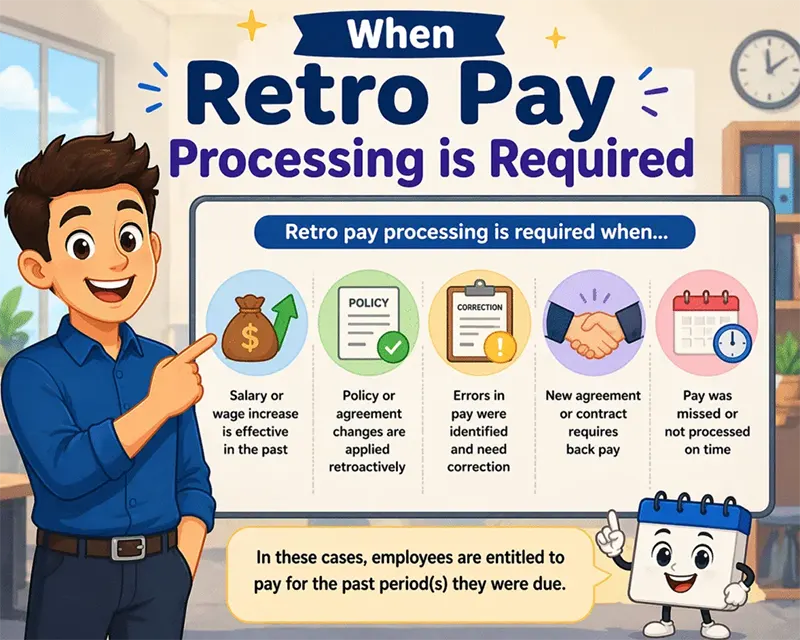
Delayed payroll updates, miscalculations in salary, bonus inconsistencies, contractual changes, or overtime pay adjustments are among the major causes of incorrect compensation. Beyond these, here are the primary scenarios where processing retro pay is required for your business.
- Payroll Errors and Pay Raise Discrepancies: These occur when your payroll software encounters data entry errors or inaccurate calculations of work hours. Also, if promotions and salary increases are not implemented efficiently in the payroll system, it will lead to the need for retroactive payments.
- Miscalculations of Wages and Bonuses: From different collar jobs to salaried employees, retrograde pay is required when there are errors in the calculation of bonuses and increased wage rates.
- Overtime Compensation and Job Reclassifications: If you have not paid the overtime hours or calculated overtime wages at the regular rate, you will have to provide the difference with the entitled 1.5x rate. Also, recalibration and retroactive pay are needed when a worker is reclassified and moves from exempt to non-exempt.
- Inconsistencies in the Shift Differentials: Firms are obliged to pay higher wages for night shifts, weekends, and government holidays. Hence, retro payments are required when firms pay wages with standard payroll rather than increased rates.
- Contractual Changes and Late Time Card Submissions: In case of new collective bargaining agreements or implementation of new union contracts, organisations are entitled to pay employees with the new contract rate.
Also Read: 90 Good Questions To Ask In An Interview: A Detailed Guide For Employers And Candidates
What are the Benefits of Retroactive Payment?
Understanding what are retroactive payments assists firms in building brand credibility and employee trust, adhering to regulatory obligations, and rectifying system and payroll errors. Learn about them in detail in the pointers below:
- Adhering to Legal Compliance: Businesses can efficiently comply with legal requirements and labour laws with the use of retro pay and correcting wage errors as per regulatory standards.
- Enhancing Business Credibility and Trust of Workforce: Effective communication with employees and correct implementation of payroll with standard rates helps in building brand credibility. It also contributes significantly to improving the trust of the workforce for better employee retention
- Rectifying System Errors and Timely Corrections: From the correct calculation of Dearness Allowance to the timely rectification of wage discrepancies, retro pay allows firms to mitigate the impact of system errors and provide accurate compensation.
- Managing Promotions, Commissions, and Bonuses: Retro payments contribute significantly to efficient management of wages when an employee is promoted to a higher salary tier mid-month, or you have to reduce delayed funds for commissions and bonuses.
How can You Manage Tax Holding and Legal Considerations for Retroactive Pay?
While issuing retro pay, it is crucial to withhold required taxes and comply with legal regulations. As it is usually taxed as regular income, you can refer to the pointers below to analyze how you can effectively manage tax obligations and regulatory requirements.
- Utilise an Advanced and Reliable HR Software: For efficient management of tax withholdings, regulatory standards, and employee payroll, you must leverage the use of a trusted HR software like Managetrix.
While it streamlines employee performance evaluation, your firm can enhance operational efficiency by automating redundant HR tasks.
- Use the Aggregate or Percentage Method for Withholding: Basis of the obligation of state, local, FICA, or Federal income tax, your firm can use the aggregate method or percentage method.
While the aggregate method accounts for retro pay added to the employee’s regular wages, the percentage method takes care of retro pay issued as a standalone and separate payment.
- Ensure to Use the Employee’s Gross Pay Rate for Calculation: Rather than using the net pay rate for calculating retroactive payment of employees, you must utilise the gross pay rate. This helps in configuring a baseline to measure the total pay difference for hourly or salary adjustments.
- Prepare Meticulous Record Keeping: Ensure FLSA compliance and prompt payments of remaining differences, along with accurate record keeping that will allow you to have crucial evidence to mitigate potential disputes.
Also Read: PTO Meaning: Definition, Types, and Best Practices
Wrapping Up
Retroactive pay is an important component of ensuring that the employees of an organisation are paid accurately as per regulatory standards.
As it is the difference between the amount an employee received and what they were entitled to receive, retro pay allows firms to mitigate payroll errors. This builds employee trust and retention while complying with federal mandates.
FAQs
1. What does the retroactive pay mean?
Ans: You can simply define retroactive pay as compensation or wages that are added to the employee’s salary or paycheck for the correction of a past underpayment.
2. How can I calculate retroactive payment?
Ans: You can simply calculate retro active pay by finding the difference between the salary that was paid and the wages that the firm was required to deliver. Retro pay can be simply calculated by annual salary difference ÷ number of pay periods per year × the number of affected pay periods for salaried employees.
3. What are the primary differences between retro pay and back pay?
Ans: Retro payment is the compensation that is provided for the specific period of time during which the employees received less than their entitled salary. However, back pay refers to the wages offered to the workers for completely unpaid work periods.
4. When is a retro payment required for the organisation and employees?
Ans: Retroactive payment is required when the employer provides incorrect salary wages due to delayed HR or payroll updates, system errors, policy changes, contract revisions, differences in shifts, or legal compliance.