

Labor laws are of utmost importance, as they protect the rights of employees and set ground rules for the organization, which are fair towards both the involved parties, the employer and employee.
With the assistance of human resources (HR), business growth can elevate to new heights while also keeping employee morale and productivity up. The most important purpose of these labor laws in India is to establish workers as equals in an office environment and promote empowerment as a whole of the workforce.
What are Labor Laws in HR?
Labour laws in Human Resources (HR) are the legal rules followed by companies and their employees, which govern the working hours, wage compliance, and safety standards. The HR manager has to make sure that the labor laws set by the government are followed and that compliance is ensured.
They have one purpose: to protect the rights of employees and to state the employer’s responsibilities and obligations clearly, so a fair and positive environment is maintained in the workplace and the company complies with the set rules. To avoid legal risks and penalties, HRs must be clear on and aware of these labor laws.
Modern HR labor law compliance in India is now mostly focused on four labor codes: Wages, Industrial Relations, Social Security, and Occupational Safety.
State-Wise Implementation of Labor Law
The implementation of labor law in India is going strong, but every state is at a different stage of implementation:
- Maharashtra and Uttar Pradesh: All codes approved
- Telangana, Haryana, and Gujarat: Draft Rules Issued
- Karnataka, Tamil Nadu, and Delhi: Partial implementation (Some codes notified)
Looking at the current situation, many states have only succeeded with partial implementation of major labor law codes. This type of situation calls for raising more awareness on this subject amongst working individuals, jobseekers, and HR managers, as secure wages and a safe working environment must be encouraged, and that can be made possible with proper and full implementation of labor laws in India.
Different Aspects and List of Labor Laws in India
The government of India has implemented 4 codes related to labor laws in India, which comprise 29 central labor laws to simplify compliance and modernize rules and regulations set previously. All four major labor law codes and their purposes are:
| Code | Purpose |
| Code on Wages, 2019 | Rulings on Wages, bonuses, and equal pay |
| Code on Social Security, 2020 | Contains PF, Gratuity, ESI, and Maternity benefits rulings |
| Industrial Relations Code, 2020 | Streamlining the process of industrial disputes and unions |
| Occupational Health, Safety, and Working Conditions (OSH) Code, 2020 | Contains mandates on safety standards, annual health check-ups, and limited working hours |
These codes are intended to ease the burden of compliance on firms by amalgamating licenses and multiple registrations into a single, smooth, streamlined process.
All the codes emphasize the safety of workers, social security, and ensuring proper wages and appropriate working hours; all these have been made non-negotiable by the government of India, and it is expected of the HR manager to follow and enforce these rules with honesty and vigilance in their workplaces.
Implementation of Labor Laws in India
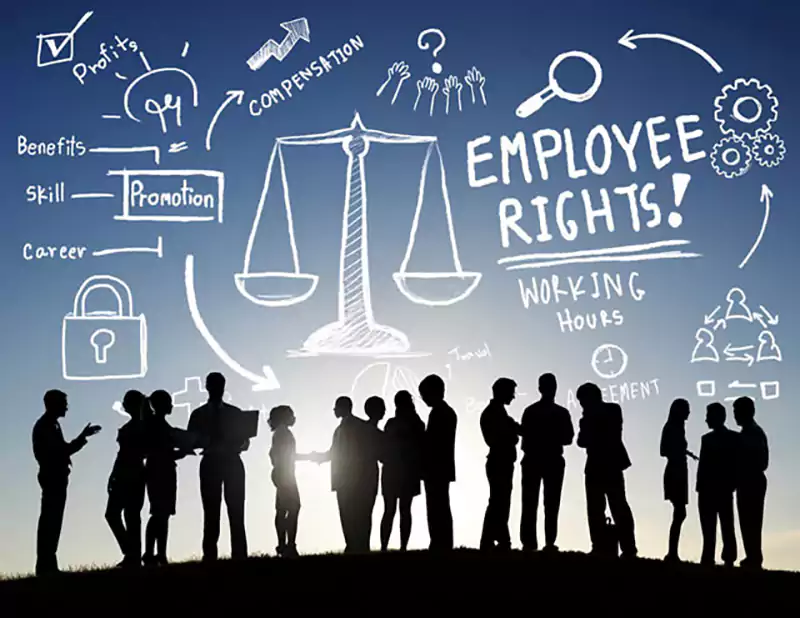
These codes consist of various policies that, when implemented with the assistance of the HR department in a workplace, ensure:
- The safety and well-being of employees: The HR team provides workplace training and conducts safety audits to test their emergency facilities and first aid response to test readiness, and ensure everyone is properly trained to conduct themselves when a real crisis occurs.
- Anti-Discrimination and Harassment: In the company, HR needs to manage and create anti-discrimination and sexual harassment policies. An internal complaints committee is established for offenses related to these kinds of cases and issues.
- Benefits for employees: The human resources (HR) department plays a big role in ensuring that all employees of the workplace are offered adequate breaks and other fair benefits.
What are the Penalties in Labor Laws?
Compliance with the set labor laws has been mandated by the government of India, and failure to comply with set regulations can lead to hefty penalties and going through legal processes for the company. If the rules are not followed, it leads to negative outcomes, such as:
- Hefty fines can be faced by firms, depending on the severity and nature of the offense committed.
- Long legal procedures can be the result of non-compliance with set regulations, which may further lead to the payment of compensation or corrective actions and restrictions being imposed on the company.
- A company’s image may be affected and tarnished, leading to a negative effect on customer and business relations.
- In extreme cases, the government has the right to terminate or suspend the business activities of a company due to negligence in compliance.
What are the Responsibilities of an HR Towards the Implementation of Labor Laws in India?

- An HR should ensure that all policies are correctly implemented and followed with honesty on the ground level.
- HRs must make sure that all the employees, permanent, temporary, and contractual, are given written employment contracts containing all the required details like wages, terms of employment, etc.
- Records must be kept by HR, which tracks wages, leaves, and other important information to ensure compliance during routine checks.
- Abiding by the equal employment opportunity rule, HR management must ensure it is rightly followed, and no discriminatory practices are used during or after the process of hiring, employment, or termination. Policies and fundamental rules need to be put in place by HR to ensure it never happens.
- The human resources department also must always handle disputes professionally and make sure they are resolved while ensuring full employee confidentiality.
- Labor laws clearly state how an employee’s private data needs to be taken care of and how confidentiality related to private and sensitive information must be treated, gathered, or used. To preserve this, HRs must make sure data protection rules are followed, without fail.
- It is the responsibility of HR to stay aware of legal changes and updates to policies and rules made by the government in accordance with the labor laws.
How Does Managetrix Protect Employees with Labor Law?
Labor law compliance improves manifold with the use of Managetrix, as it manages, tracks, and even automates labor law compliance by handling employee records, payroll information, and reporting, all on its own.
Here’s how it improves the functioning of an HR’s responsibilities:
- Minimizes chances of legal risks by instantly updating changes related to PF, gratuity, and other statutory rules.
- Produces audit-ready documents automatically, which prevents penalties from authorities.
- Automated attendance and time tracking are done by the software, which is also capable of creating and maintaining records of multiple employees, all at once.
- It also acts as a digital locker for securely holding employees’ personal and intellectual data, and even compensation insurance documents of workers.
- Provides 24/7 AI chatbot and helpdesk support whenever needed to help queries as fast as possible.
Conclusion
These Labor laws in India are essential for a workplace to function efficiently and ensure everyone is given fair treatment. An HR must be thorough with these steps and must know that their role in these matters is of utmost importance, as without their compliance, there wouldn’t be a proper implementation of these laws.
FAQs
1. How many labor laws are there?
Ans: There are mainly 4 major labor laws in India. Each one serves a distinct purpose of its own.
- Code on Wages, 2019
- Code on Social Security, 2020
- Occupational Health, Safety and Working Conditions (OSH) Code, 2020
- Industrial Relations Code, 2020
2. What is the role of HR in labor law compliance?
Ans: It is the duty of an HR to ensure that all labor laws are followed and correctly implemented in the workplace and that everyone gets fair treatment.
3. What is the purpose of labor laws in India?
Ans: The purpose of labor laws in India is to protect the employees and ensure that workers’ basic rights, like secure working conditions and the right to a living wage, are safeguarded.
4. What are unfair labor practices under the labor law?
Ans: Discrimination against employees by the employer based on religion, race, gender, or any other related characteristic is considered an unfair labor practice under the labor laws of India.
5. Which labor law contains rulings on wages and bonus pay?
Ans: Code on Wages, 2019, contains rules and regulations on wages, equal pay, and bonuses, ensuring the employees get fair compensation for their work.