

When you apply for a loan or rental lease, you are asked to submit an employment verification letter.
Do you know what it is and how it is written?
It is a document providing an official record of the employee to the concerned authority to verify his/her occupational details for specific purposes, such as a visa, a loan application, or for rental lease.
Want to learn more about it?
Read on for its basic format, purpose, and tips for writing one such letter. Also, our 6 ready-to-use samples will give you a better idea of it.
What is an Employment Verification Letter?
An employment verification letter is a formal document to confirm the occupational status of an employee. It is generally released to assert the accurate details of the employee for employment as well as non-employment purposes, such as visa applications.
The HR team of a firm is generally entrusted with the responsibility of releasing it.
Typically, it is requested for the following purposes:
- Confirmation of the employment
- Salary verification
- Affirming the designation
- Term served in the office
In such circumstances, it acts as proof of the individual’s job status.
This document is issued not only after the employee has resigned from his/her post, but it can also be released during their term in the office.
As it is a formal correspondence between the firm, employee, and the concerned organization that has asked for it, there is a specified format that you must adhere to before constructing it.
Suggested Read: Salary Slip Format: Complete Guide to PDF, Word, and Excel
What is the Format of an Employment Verification Letter?
The format of an employment verification letter typically includes the firm’s name and address, the employee’s name, designation, salary, and pay period.
As it is a professional communication, it needs to be structured in a specific format to exhibit maximum information in the shortest way possible.
Here is a general format of this letter that you can use for reference.
| (Company Name) (Company Address) Date: Subject: To Whom It May Concern, ——————————————-Body——————————– Sincerely, (HR Representative’s Name) (HR Representative’s Job Title) (Phone Number) (Email Address) |
Now, let’s take a look at the steps to learn how we can structure it well.
- Start with an Intro: The body of the letter must start with an intro line to mention details of the sending authority and the context. It must mention the details of the firm, the date of issuance of the letter, and the subject.
- Mention Employment Details: In the subsequent part, mention the details of the employee, such as his/her name, designation, and joining and relieving date (if applicable). You can add the salary figures of the employee, if required.
- Include Company Information: Provide the company’s information or the HR’s contact details, in case the letter accepting authority has any concern or doubt.
- End with Signature and Details of Issuer: At the end, provide the signature and details of the issuer to authenticate it.
The key elements in its format are as follows:
- Hiring Date: The letter should mention the joining date or the hiring date of the employee to indicate since when the employee has been with the firm.
- Designation: The designation of the employee must be mentioned explicitly in the letter to specify the details.
- Current Salary: In most cases, the salary of the employee is mentioned in it, especially when it is required while switching jobs or applying for a loan, or renting or leasing.
- Pay Period (If applicable): Some firms have different pay periods for freelancers, temporary workers, or remote employees. If it is so, then the letter can mention it.
- Address of the Firm: To confirm the occupational status, the address of your office must be mentioned, to ascertain the branch where he/she works, and to contact the firm to resolve any query.
These pieces of information need to be arranged in a particular manner to give them a formal essence.
6 Employment Verification Letter Samples
Here are 6 employment verification letter templates that you can use for professional purposes.
- For Current Employees
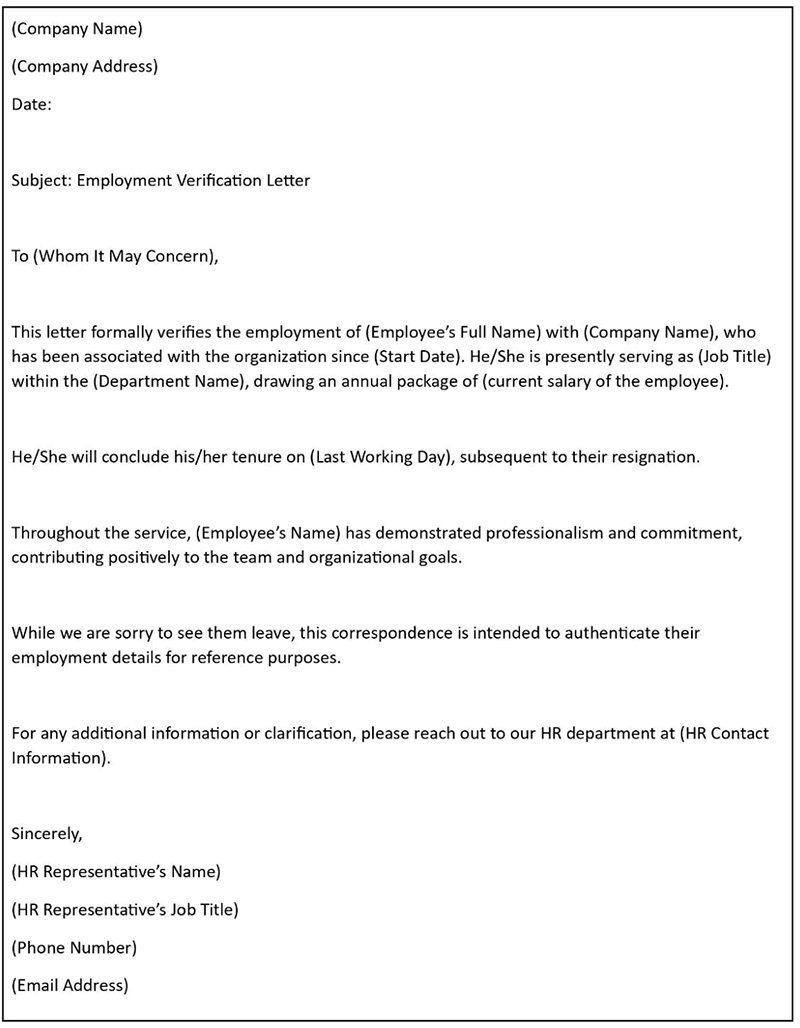
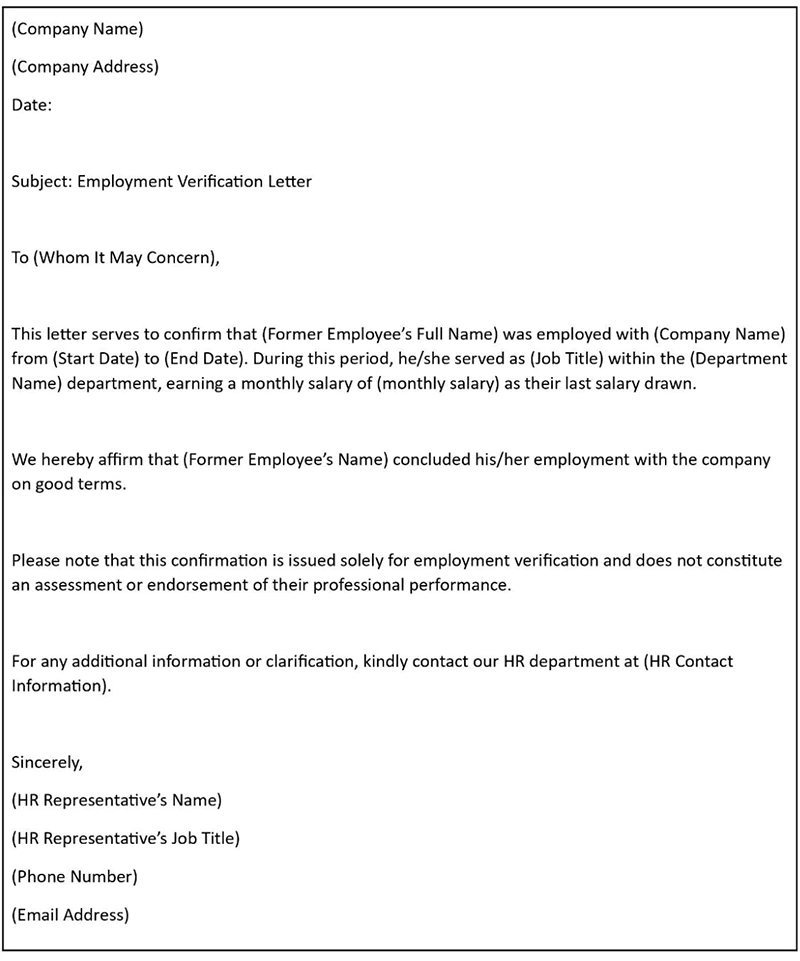
- For Past Employees
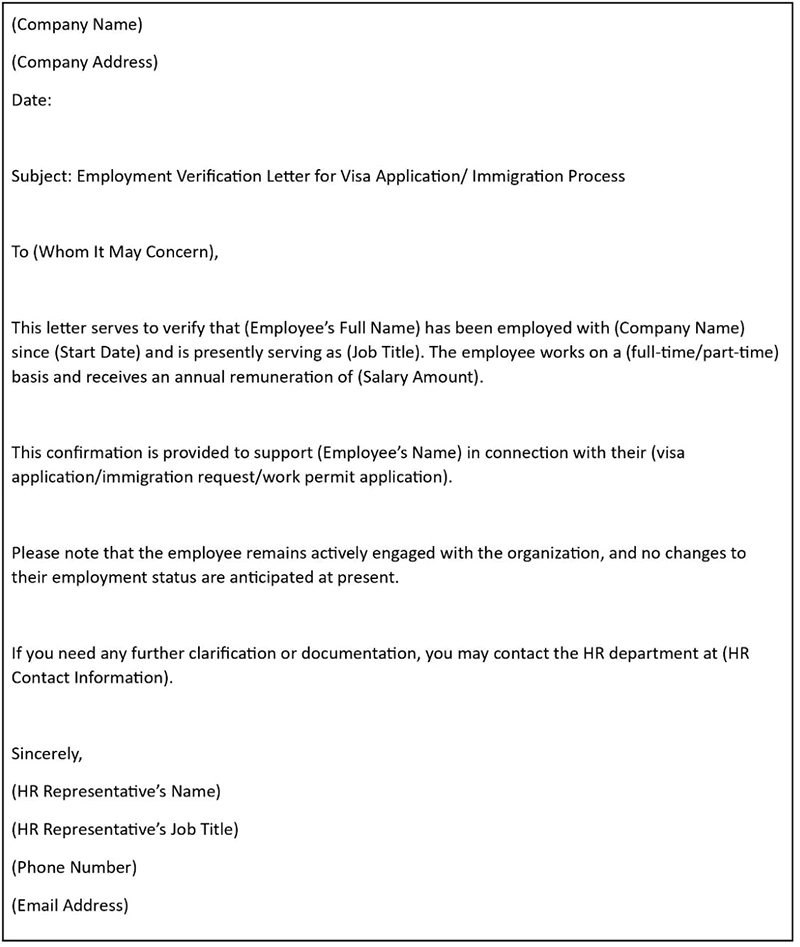
- For Visa or Immigration Purposes
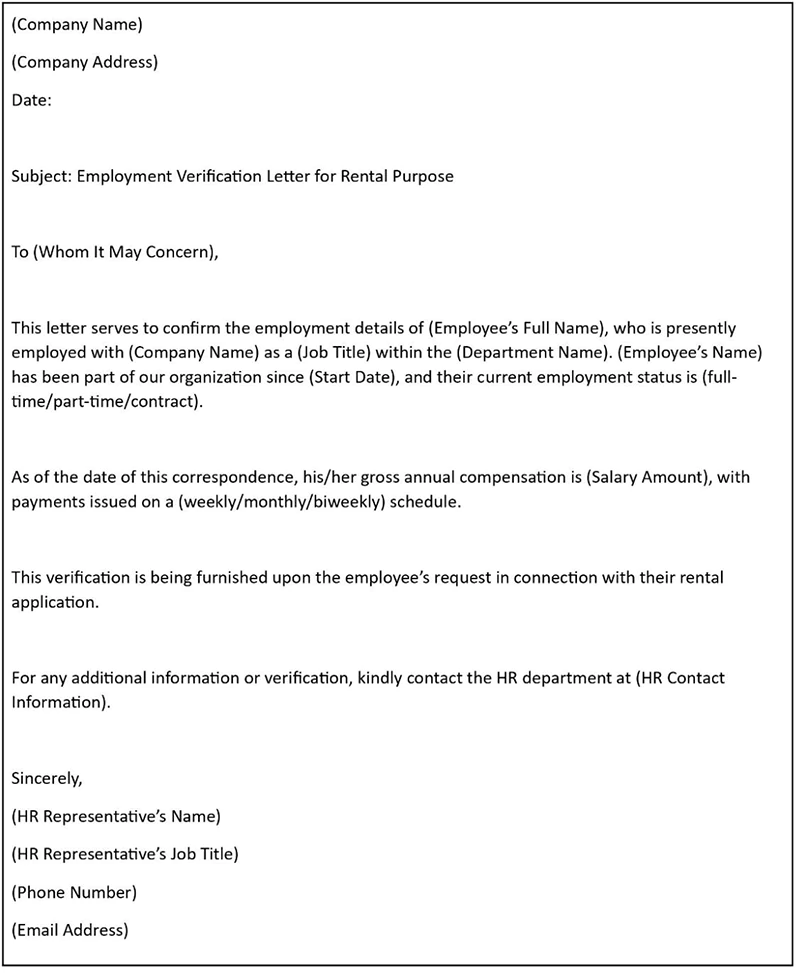
- For Rent Purposes
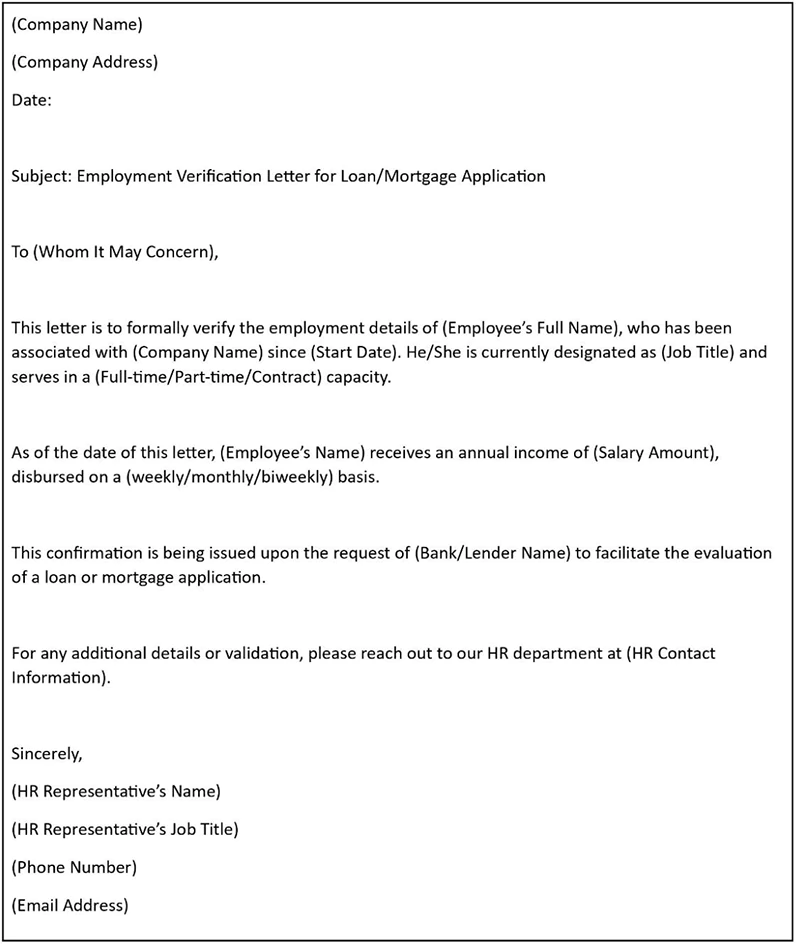
- For Mortgage or Loan
- For Claiming Government Benefits
Difference Between an Employment Verification Letter and an Employment Verification Document
The employer issues an employment verification letter to confirm the employee’s occupational details, while an employment verification document allows the individual to work in a specific territory, like the US.
Here are the major differences between them.
| S. No. | Differences | Employment Verification Letter | Employment Verification Document |
| 1 | Issued by | Issued by the employer | Issued by the government. |
| 2 | Purpose | To verify the occupational status of the employee. | To allow the individual to get employed in a country. |
| 3 | Method to get it | Sending a request email to the head of HR of the firm. | Applying for Form I-765 in the US. |
Things to Keep in Mind While Writing an Employment Verification Letter
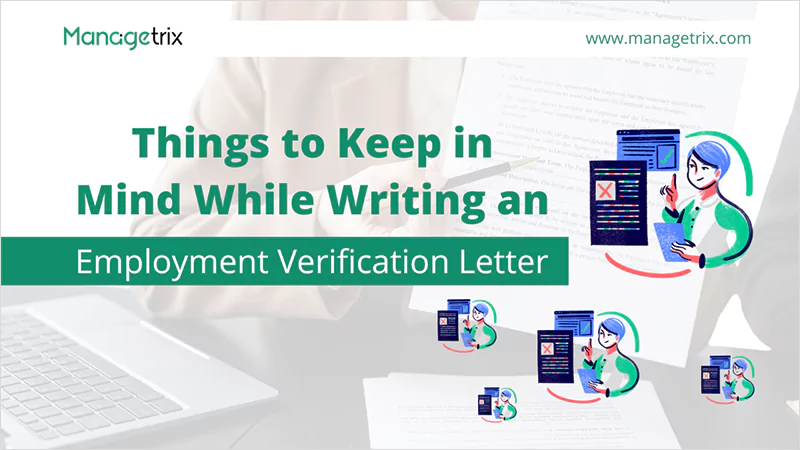
While writing an employment verification letter, you must ensure it is error-free, written in a formal tone, has a positive context, and contains correct information.
Here is a crisp explanation of these tips:
- Should be Error-free: Typos or grammatical errors may divert the context. Take a second look at the letter and make sure it is error-free.
- Use Formal Language: The language used in the letter must be formal, as it is concerned with the correspondence between the two professional authorities.
- Keep it Positive in Context: Make sure the letter is written in a positive tone and exhibits the required details.
- Details Should be Accurate: The details provided in the letter must be accurate and match with other documents, such as the relieving letter or the employment contract.
Things to Avoid While Writing an Employment Verification Letter
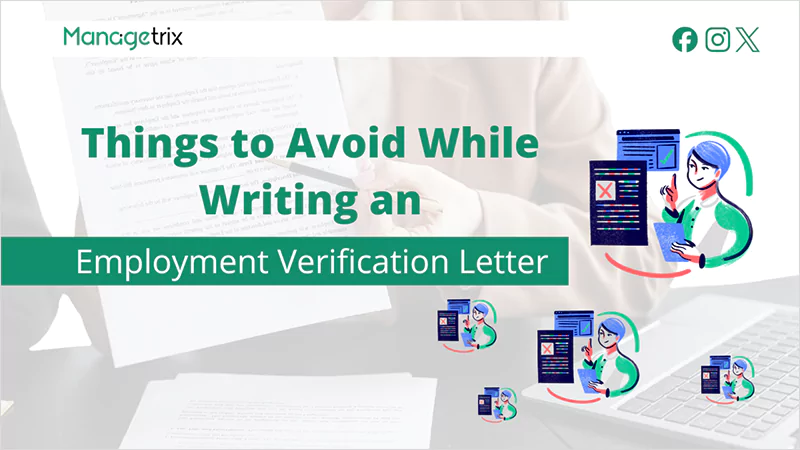
While writing an employment verification letter, make sure you don’t discuss the employee’s personal issues, don’t provide irrelevant details about the job, don’t mention incorrect job details, and don’t discuss the employee’s performance.
These don’t are explained in the following points:
- Avoid Discussing Sensitive Information: Mentioning any sensitive information about the employee, such as personal issues, is not a good practice while writing this letter.
- Irrelevant Details: The details not relevant to the outsiders, such as particulars of the project the employee is/was involved in, are not required to be mentioned in this letter.
- Incorrect Information: The employment details provided in the letter should not be inaccurate, as this can cause conflict in the respective purpose of the letter.
- Employee’s Performance: Make sure the performance of the employee, be it good or bad, is not discussed in it.
What is the Purpose of an Employment Verification Letter?
An employment verification letter is asked for during a job transition, while applying for a visa, green card, loan, or claiming government benefits.
These purposes are comprehensively explained below:
- Joining a New Company: This letter is generally required when you switch jobs. The company you aspire to join can demand it to verify the details, especially the salary you were drawing there.
- Visa and Green Card Verification: Some countries ask for this letter while applying for a visa and for a green card in the US for any family member. The applicant needs to provide a document with a W-2 or 1099 form to authenticate his/her financial strength to take care of the member.
- Lease agreement: While finalizing a rental lease, the lender can ask you for your employment verification letter to confirm your ability to pay the rent.
- Financial Institutions: If you are applying for a loan or mortgage, you will be asked for this letter during the application process to validate your loan returning capacity.
- To Claim Governmental Benefits: Some countries provide public services like public housing and financial aid to people falling in a specific income range. To claim such benefits, this letter is mandatorily required.
Conclusion
From the above discussion, we can infer that the employment verification letter is a vital document to specify and authenticate an employee’s job details. It acts as a formal communication medium between 2 authorities to exchange employee records.
Hence, the details in it need to be accurate and updated, for which you can employ the Managetrix payroll service, which is widely revered and recognized across global firms.
Next Read: 10 Employment Reasons for Leaving: Answer this Common Interview Question Effectively
FAQs
1. What is an employment verification letter?
Ans: An employment verification letter is a formal document issued by an employer confirming an employee’s job title, start date, salary, and status.
2. Who typically issues an employment verification letter?
Ans: The HR department or authorized personnel from the company handles the issuance, ensuring accuracy and including contact details for follow-up verification by requesting parties.
3. How does an employment verification letter differ from a relieving letter?
Ans: The relieving letters are issued post-resignation, employment verification letter verifies current or past employment without performance evaluations.
4. Can an employment verification letter be used for rental applications?
Ans: Yes, an employment verification letter can be used for rental applications. Landlords require it to confirm income stability and job security.