

Compensating employees is what keeps them motivated and makes them use their full potential.
But how to calculate these compensations?
That’s where enterprise compensation management comes into play.
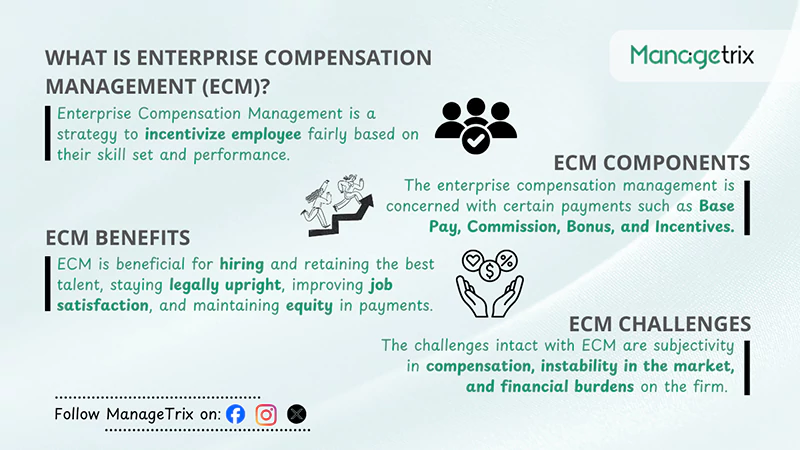
Enterprise Compensation Management is a strategy to incentivize employee fairly based on their skill set and performance. However, several other factors also influence it.
To get a comprehensive understanding of it, here is a detailed discussion about its crux and components, its benefits, strategies involved, and challenges intact with it.
What is Enterprise Compensation Management?
Enterprise compensation management is a planned approach that assists in managing employee compensation to achieve the collective organizational goals.
The fundamental aim of it is to reward the employees appropriately for their performance and ensure their satisfaction and retention, and to eradicate the inconsistencies in incentivizing them.
Basically, it is concerned with who gets rewarded, how much, and why.
Considering the compensations, there are 3 types of it based on how they are provided to the employee.
- Direct Compensation: It is the bonus, commissions, or wages that are directly paid to you and are mentioned on your salary slip.
- Indirect Compensation: Such compensations are not shown on the salary slip and are offered as benefits and perks, such as health insurance and retirement plans.
- Total Compensation: It is the total of the direct and indirect compensation that the employee receives for his/her performance.
Enterprise compensation management is concerned with all three types. These are further segregated into detailed categories in the next section.
Suggested Read: How Many Pay Periods in a Year? 2025 Employee’s Guide
What Compensations does Enterprise Compensation Management include?
The enterprise compensation management is concerned with certain payments, some of which are fixed, while others may vary.
Besides, a few of them are also in non-cash form, which are rewarded to the employee based on their performance.
All these are mentioned as follows:
- Base Pay: It is the fixed pay that the employee gets for performing their roles. It is highly dependent on the responsibilities entrusted, the designation, and the experience of the employee.
- Commissions: The commissions are the extra pay the employee receives for the extra sales he/she made in a specified time.
- Bonus: Bonuses are the extra payment that an employee receives for achieving the targets or as a gesture of loyalty to the company.
- Incentives: These are the extra pay and perks the employee receives based on performance. They can be in the form of gift cards, trips, or vacation packages offered to the employees.
- Other Benefits: Some firms provide stock options, paid time off, insurance, and retirement plans as compensation for their work.
The terms and conditions for these compensations are generally mentioned in the employment contract, which is signed by the employer and the employee before the employee joins the firm.
What are the Effective Strategies of Enterprise Compensation Management?
There are certain strategies that are employed for managing the enterprises’ compensation. These strategies are highly essential in allocating the extra pay and perks and maintaining equity.
Here are some strategies that you must consider for it:
- Analyse Performance: The base of compensation for the employees must be their performance in their role. This will translate to employees’ improved performance.
- Check Market Competitiveness: Examine the pay structures regularly against industry standards to remain competitive and retain skilled professionals in a tough business environment.
- Balance Monetary and non-monetary Balances: the employees should be offered a blend of financial rewards and non-monetary recognition, such as growth opportunities, flexibility, and acknowledgment, to maintain.
- Review Compensation Regularly: Ensure you regularly review and improve compensation management to meet employee expectations.
- Seek Feedback: Encourage employees to share honest feedback on compensation fairness and their satisfaction with it. This will help identify gaps and strengthen the overall management system.
What are the Steps to Implement the Enterprise Compensation Management Strategy?
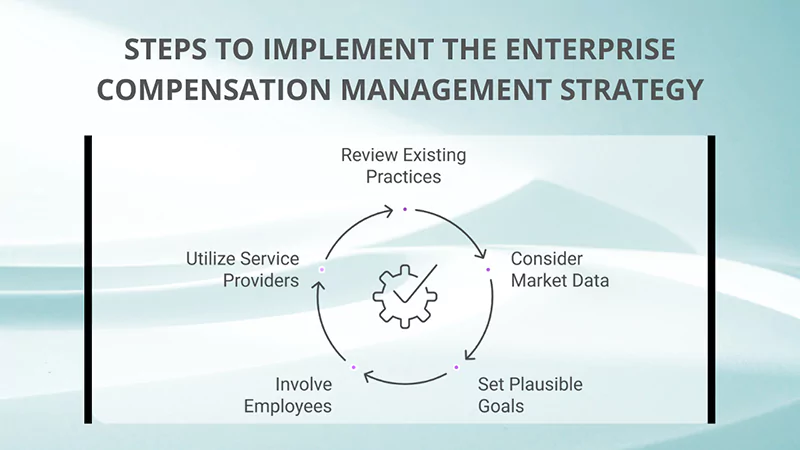
While managing the compensation, there are some steps that you might consider for implementing the above-mentioned strategies.
These steps are:
- Review Existing Compensation: Regularly examine current compensation to ensure fairness and alignment with company goals, checking gaps and retaining employee trust.
- Consider Market Data: Use available data about the salary and compensation to keep pay competitive and attract and maintain market relevance without overspending.
- Set Plausible Goals: Establish clear and achievable compensation objectives that motivate employees and support organizational growth and budgeting.
- Involve Employees: Engage the employees in compensation discussions to understand their needs. This will provide an estimate and will boost transparency, satisfaction, and loyalty.
- Utilize Dependable Service: Employ a reliable compensation management tool to automate processes and minimize errors.
What are the Benefits of Enterprise Compensation Management?
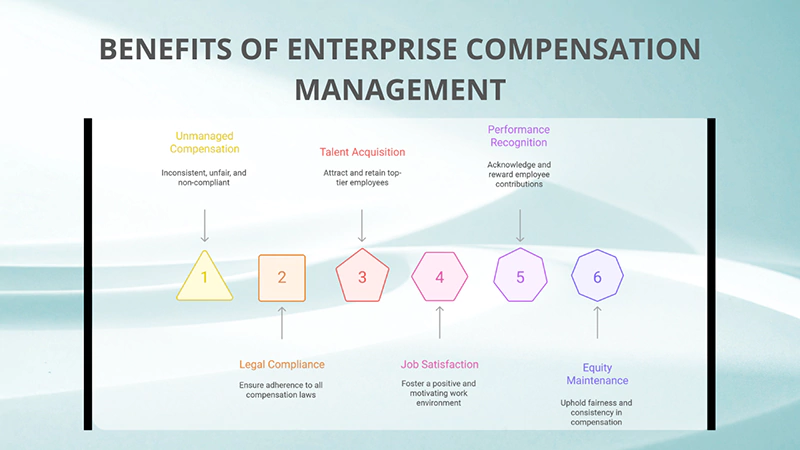
Enterprise compensation management is beneficial for hiring and retaining the best talent, staying legally upright, improving job satisfaction, and maintaining equity in payments.
Here is an explained account of these advantages:
- Hiring and Retaining the Best Talent: A strong compensation strategy attracts skilled professionals and keeps them hooked in the firm. By providing competitive pay and growth opportunities, organizations build loyalty and reduce employee resignations, and ensure long-term success and stability.
- Staying Legally Upright: Enterprise compensation management ensures compliance with labor laws and regulations and minimizes legal risks by maintaining accurate records, fair pay practices, and transparent policies.
- Maintain Job Satisfaction: Fair and timely compensation boosts the morale and job satisfaction of employees. Employees feel valued when their efforts are recognized, which further motivates them.
- Recognizes the employee’s performance: Performance-linked rewards depict individual contributions and achievements. This inspires employees to excel in their skills and fosters a culture of accountability.
- Ensure Progress: Structured compensation plans support career growth and skill development in employees. By linking pay to advancement and learning, organizations empower employees to reach their full potential, which further drives organizational progress.
- Maintaining Equity: Equitable compensations promote fairness and trust within the workforce. Transparent payment structures reduce bias and ensure equal opportunities.
Apart from its advantages, it also has some cons, which are discussed in the next section.
What are the Challenges Of Enterprise Compensation Management?
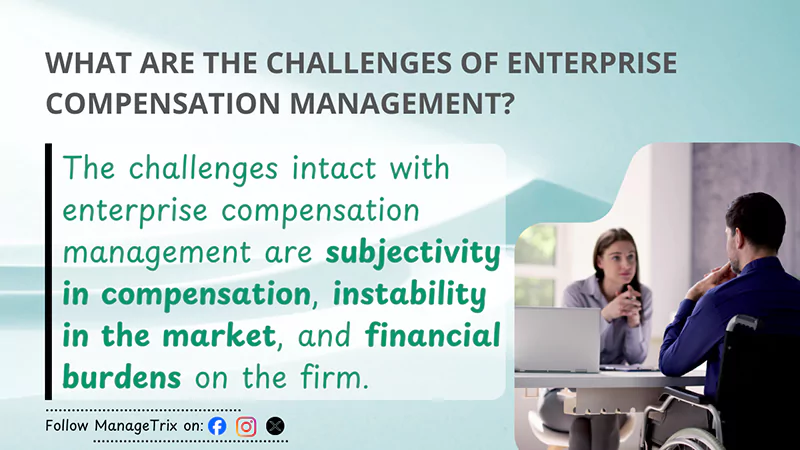
The challenges intact with enterprise compensation management are subjectivity in compensation, instability in the market, and financial burdens on the firm.
These cons are holistically explained below:
- Subjectivity in Accessing Compensation: Managers’ judgments might influence the compensation, which helps in personalized recognition of the employee. However, it may also instigate bias or favoritism, which can affect fairness and employee trust in the process.
- Volatile Market Prices: Frequent changes in market rates make it tough for companies to maintain competitive pay. This may require regular compensation adjustments to attract and retain top talent.
- Monetary Burdens: Rising total compensation costs can strain a company’s budgets, making it challenging to balance attractive reward programs with the overall organization’s financial health. The U.S. Bureau of Labour Statistics explicitly indicated through data, mentioning that about 70% of companies’ operational costs are consumed in employee compensation.
Conclusion
Enterprise compensation management is a significant strategy for deciding and rewarding the incentives, bonuses, and commissions. By aligning pay with performance and market standards, companies maintain transparency, equity, and motivation. These factors collectively drive organizational growth and stability in an increasingly competitive environment.
Next Read: What is Year To Date (YTD) Meaning? Formula, Calculator, and More
FAQs
1. What is Enterprise Compensation Management?
Ans: Enterprise Compensation Management is a strategic approach to fairly reward employees based on their skills, responsibilities, and performance to ensure their satisfaction and retention.
2. What types of compensation are included in ECM?
Ans: ECM includes base pay, commissions, bonuses, incentives, and additional benefits like stock options, insurance, and retirement plans.
3. How does ECM benefit employees?
Ans: ECM attracts the best talent, maintains employees’ job satisfaction, ensures equity, recognizes performance, and supports career growth through fair, transparent compensation.
4. Why is reviewing compensation regularly important?
Ans: Regular reviews ensure pay remains fair, competitive, aligned with company goals, and helps retain the trust of the employees.